Of All Arts Graphic Design Comes Closest to Meeting Us in Our Contemporary Daily Life
We alive in a world that thrives on visuals.
Ever since companies discovered that they could differentiate themselves through professional make photography, memorable logos and standout visual identity design, the need for slick and effective graphic design has kept talented professionals in need.
In the beginning, designers were artists who sketched shapes and concepts based on current trends similar the modernist graphic design movement. Equally the industry became more fundamentally continued to engineering science, and innovative tools began to accelerate, the field of graphic blueprint has begun to evolve.
In uncomplicated terms, graphic design is the art of combining ideas, images, and text into something that engages and informs an audience. It's most communicating through visuals. Information technology may mean using the unique psychology of logo shapes to attract a specific audition. Or, it could involve carefully selecting colours for a website to improve an arrangement'due south chances of conversions.
As a fashion of communicating through imagery, information technology makes sense that the history of graphic blueprint would evolve just every bit human communication continues to modify and develop over time. The more than graphic design companies acquire almost homo psychology, customer behaviour, and environmental trends, the more than the art of design transforms.
Here, we're going to expect at the nature of graphic design today, where the discipline came from, and how the industry continues to evolve. Grab your DeLorean, we're going on a journey through time.
The history of graphic design: Creating creativity
At its center, graphic design is a class of art, and people have e'er been drawn to expressing themselves through art. In fact, some people would argue that the history of graphic blueprint tin can be traced all the way back to cave drawings, like the pieces created in Chauvet in 30,000 BC. In 1436, the concept of graphic design took a huge leap frontwards when the "Gutenberg Press" was invented, which allowed content to be mass-produced for the first fourth dimension in history.
There are enough of examples of important graphic pattern developments through history. For instance:
- In 1796, Aloys Senefelder developed the concept of "lithography" – the first printing method using a apartment surface.
- In 1880, the rise of the halftone screen allowed for photos to exist printed in a range of shades.
- In 1932, the "Times New Roman" typeface emerged, designed by Stanley Morrison and named the "Times of London".
Much of the development within graphic blueprint equally we know it today began in the early on twentieth century, when hundreds of fonts emerged, created by graphic designers around the world. At the same time, advertising and mass media began to evolve, and professional designers found more than jobs filling the pages of newspapers, magazines, and more. In 1919, the get-go graphic design schoolhouse, Bauhaus, opened its doors in Deutschland.
To assistance you meliorate understand graphic design today and how it has evolved over the years, allow's look at some of the most significant style movements throughout history:
ane. Art Nouveau
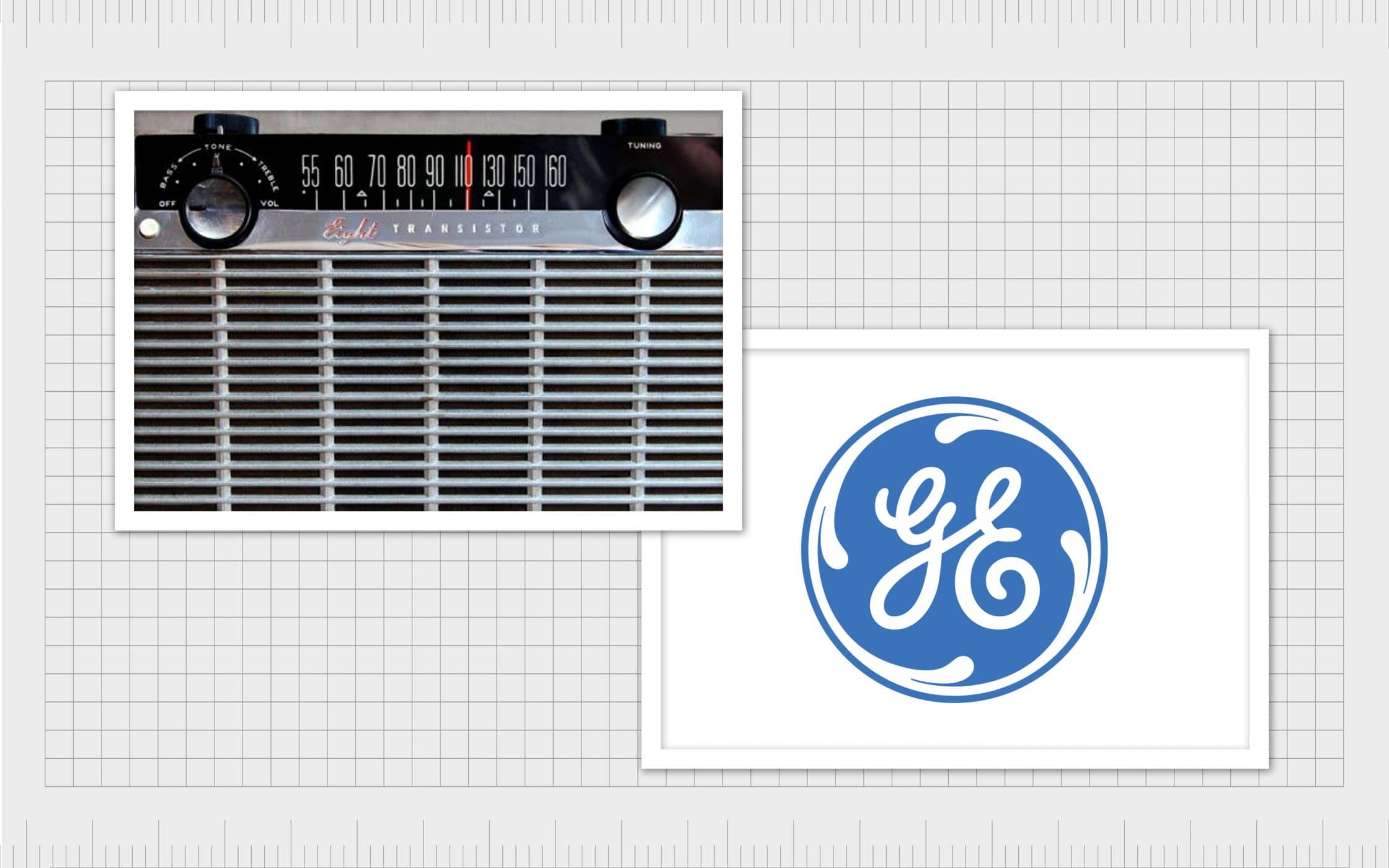
A graphic design response to the industrial revolution, Art Nouveau formed the bridge between modern graphic design and historical academic art. Much of the "New Fine art" movement involved organic vine-similar lines, elegant curves, and ornate typography. In a world where digital displays require design to exist far less complex, Fine art Nouveau design has become an outdated element of graphic blueprint for most. Nonetheless, the soft colours and flourishes may contribute to vintage graphic blueprint strategies. For case, the General Electric logo is very Fine art Nouveau:
2. Modernism
Modernism became part of the history of graphic design during the 1950s. This style is characterised past the deliberate determination to pass up artist styles of the past, emphasising experimentation with new materials and techniques instead. The aim of modernist graphic design was to create artwork that reflects the nature of modern gild. Bold colours, uncomplicated shapes, and modern fonts are all common elements of modernist graphic pattern. Airbnb offers a peachy example of a modernist logo.
iii. Fine art Deco
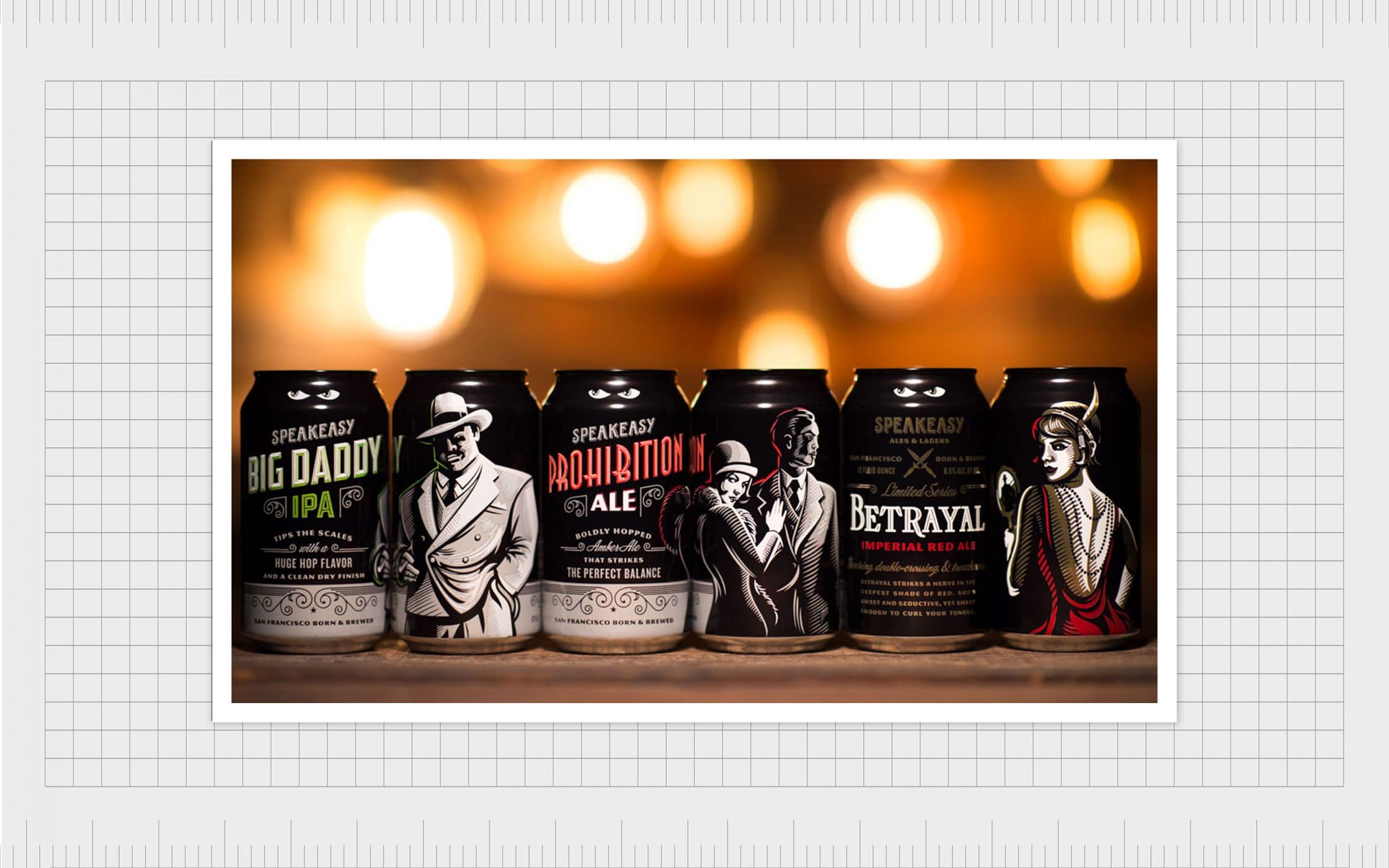
The Art Deco graphic design motion became popular during Earth War 1. For many, it was a spinoff of modernism and a fashion for graphic designers to bear witness the luxury and beauty of simple shapes and typography. This art grade is lavish and authentic, with plenty of geometric shapes, contrasting colours, and symmetrical patterns. The idea was to create a sleek sense of elegance that symbolised wealth and sophistication.
four. Swiss manner
Oft referred to every bit "international typographic style", Swiss mode unsurprisingly originated in Switzerland during the 1950s, and it's the basis for a lot of the development within the history of graphic design throughout the 20th century. Swiss design continues to influence the field today, thank you to its focus on legibility and simplicity. Graphic designers using Swiss-fashion focus on typography and sans-serif fonts, rather than sketches. For instance, the Microsoft logo might be a good example of Swiss design.
5. The Digital era
Today, mod graphic pattern has come up a long way from the traditional hand-drawn glyphs and imagery of decades by. Ever since the launch of the Mac computer, more people than ever before have had access to hundreds of tools and solutions that make graphic design more efficient and complex, at the same time. The mod world doesn't have i unmarried style to speak of. Instead, graphic design today focuses on the trends and expectations of the industry.
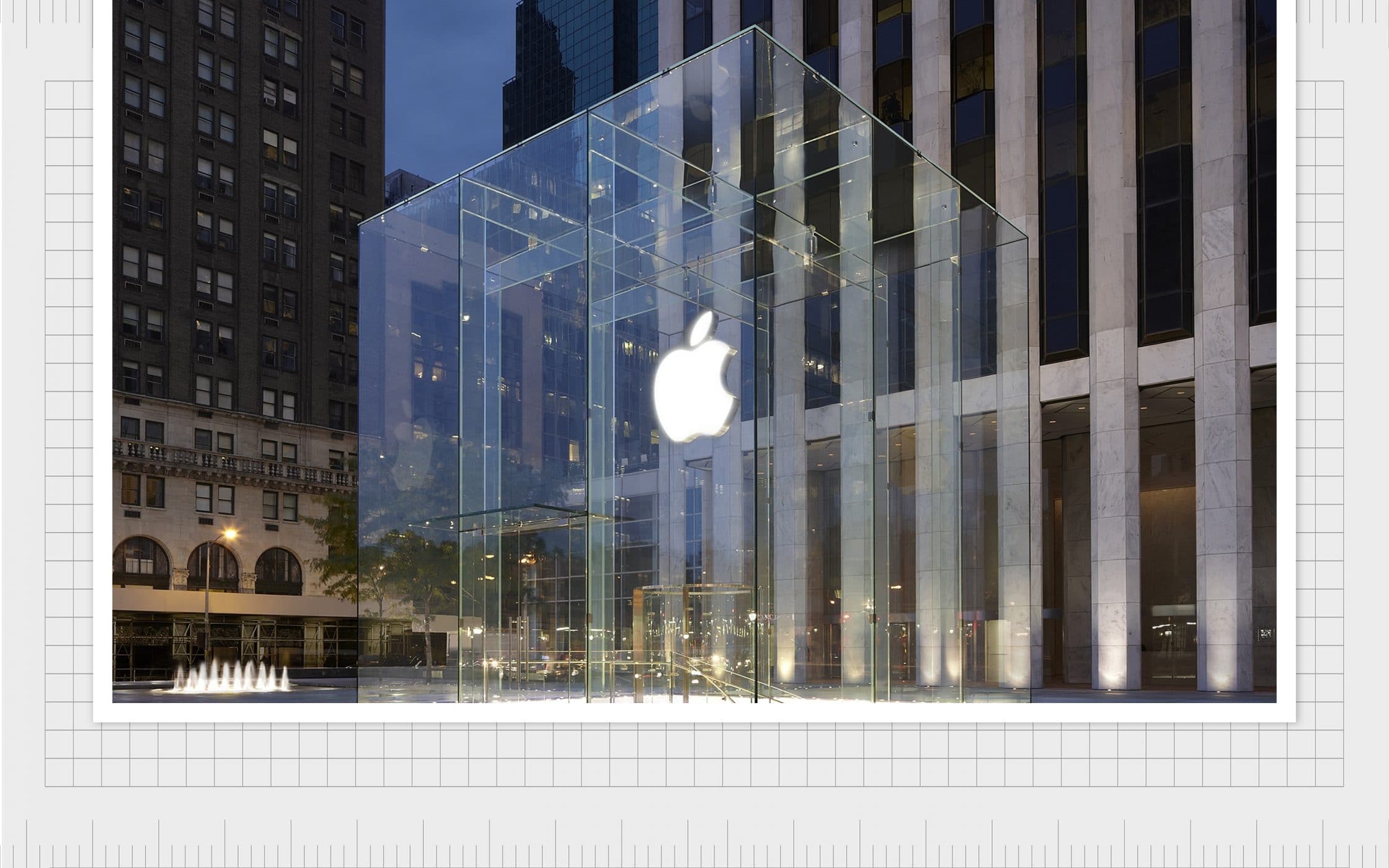
To create a logo that lasts, or establish a unique prototype for their brand, modern companies are looking for a way to entreatment to their target audience by analysing current trends. For instance, the Apple logo evolved from something very Art Nouveau, into something simple, straightforward, and innovative – just similar the brand itself.
Graphic design today: How the world has changed
Few things have afflicted the history of graphic design as significantly as the rise of applied science and digital transformation.
A few decades ago, no-one could have imagined where computers and the spider web would take us. Now, we tin can but await back in awe at the touch on the digital revolution has had on the way we piece of work, communicate, and socialise. Mod graphic design has go more intuitive and immersive than e'er, as artists no longer judge at what their markets are looking for. Inspiration and guidance are everywhere, transforming graphic designers into masters of consumer manipulation.
Here are just some of the changes we've seen in graphic design today.
1. Companies are investing more in graphic design
The number of people investing in graphic design companies has gone upwardly astronomically. Technology ensures that brands accept more opportunities for exposure online. Those who want to collaborate with their clients in a memorable style need an image, and that's where graphic design comes in.
What'south more, the online world means that companies can analyse real-time data and find out which graphical elements are having the best impact on their business organisation. This ways that brands aren't simply investing more into designers, they're too getting a higher return on investment too! Graphic design has get a global chat between brands, their customers, and the people with the creativity to bridge the gap.
ii. Clever content marketing and graphic blueprint
Back when graphic pattern first became a fundamental role of marketing, artists focused mostly on designing logos and advert media for their clients in the course of leaflets and banners. Graphic blueprint was an occasional purchase, merely today, information technology's a consistent part of a solid branding strategy. In fact, some of the best companies in the globe use graphic design every day with their social media marketing and content marketing efforts.
In a world where customers want to build stronger, more than unique connections with companies, stock photography and dime-a-dozen images won't do. Graphic designers now have the power to prepare organisations apart in the digital mural, with visuals and brand photography that tin capture the attention of an entire audition.
3. New channels to explore
Speaking of content marketing and social media, graphic designers are now embracing a range of new skills to power their craft. In the past, designing media for a company was all nigh explaining what the concern did in the nearly effective way possible. While that's still a common component of graphic design today, there are so many new concepts to retrieve near also.
For case, psychology and heir-apparent behaviour now plays a part in graphic design. Many branding experts expect at things similar the psychology of colour, and the impact of shapes to make sure they're conveying the right personality for each client. At the same time, designers aren't but creating imagery for a single platform anymore. Logos, visual identity avails, and graphic pattern elements all have to perform equally well on apps, mobile devices, and larger screens as well. This ways that new disciplines like "responsive" design" have emerged in the blueprint globe.
The function of the graphic designer has changed
Fundamentally, the role of the graphic designer has changed, from a one-off contractor to an essential office of whatever concern team. Today'due south brands rely on their designers not just to create logos and tactical communication pieces, just to establish presence for them in the online world and build recognition for their brand. Graphic design isn't just almost the artwork anymore, information technology's about the process of establishing a real connection betwixt customers and companies using words, tone, images, design and technology.
Modern graphic design: The trends nosotros're seeing correct now
The nature of man communication and the rapid step of the digital globe means that it'south frequently difficult to proceed track of the ever-changing nature of graphic blueprint. In an era where applied science is everywhere, making creativity more attainable, trends in modern graphic design tin dissipate as quickly as they emerge.
Something that appeared to be cutting-edge in 2017 might be totally outdated in 2018. Similarly, a design that inspires the globe today, might be erstwhile news tomorrow. For instance, some of the modern graphic design trends we're seeing today include:
1. Simplification
Today's customers are busier and more rushed than ever before. They don't have the time to deal with companies who can't convey their personality and intent within the simplest possible graphic. In the past, companies who wanted to make a big impact would become large, bold, and even complex with their logo designs and websites. Today, simplicity is the key to success.
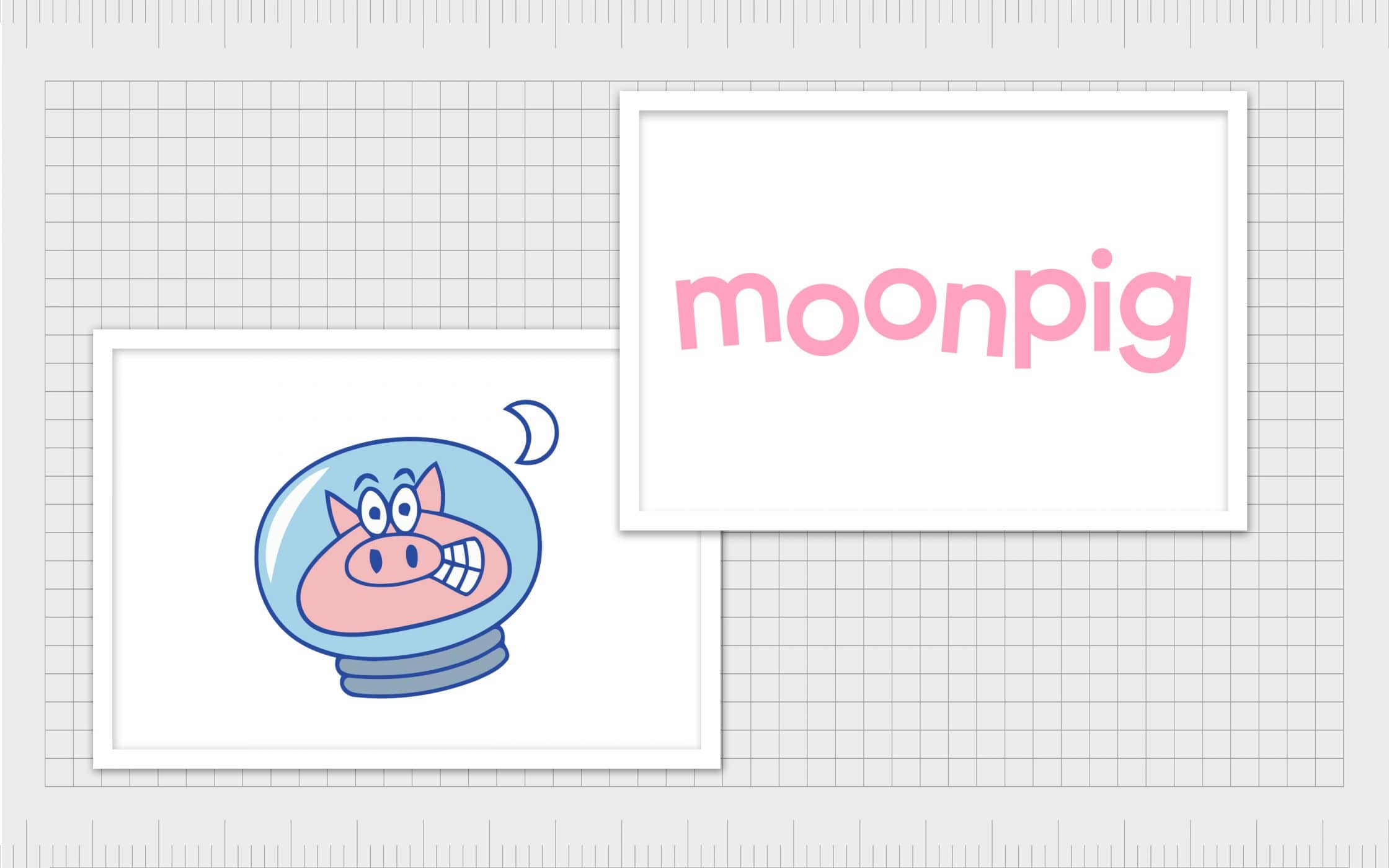
For instance, the Moonpig rebrand involved getting rid of the space squealer epitome entirely and showing off their fun personality with a lilliputian bit of simple textual kerning. The wonky letters in the Moonpig logo does more to demonstrate the company's nature than any drawing graphic symbol, and it makes the brand appear more than professional too.
2. Bold and brave colours
If similar united states, you've been keeping runway of the trends in logo pattern and branding recently, and then y'all'll accept noticed the overwhelming amount of colour that emerged in 2017. Graphic designers have begun to brand bigger and bolder choices combined with apartment graphics and uncomplicated shapes.
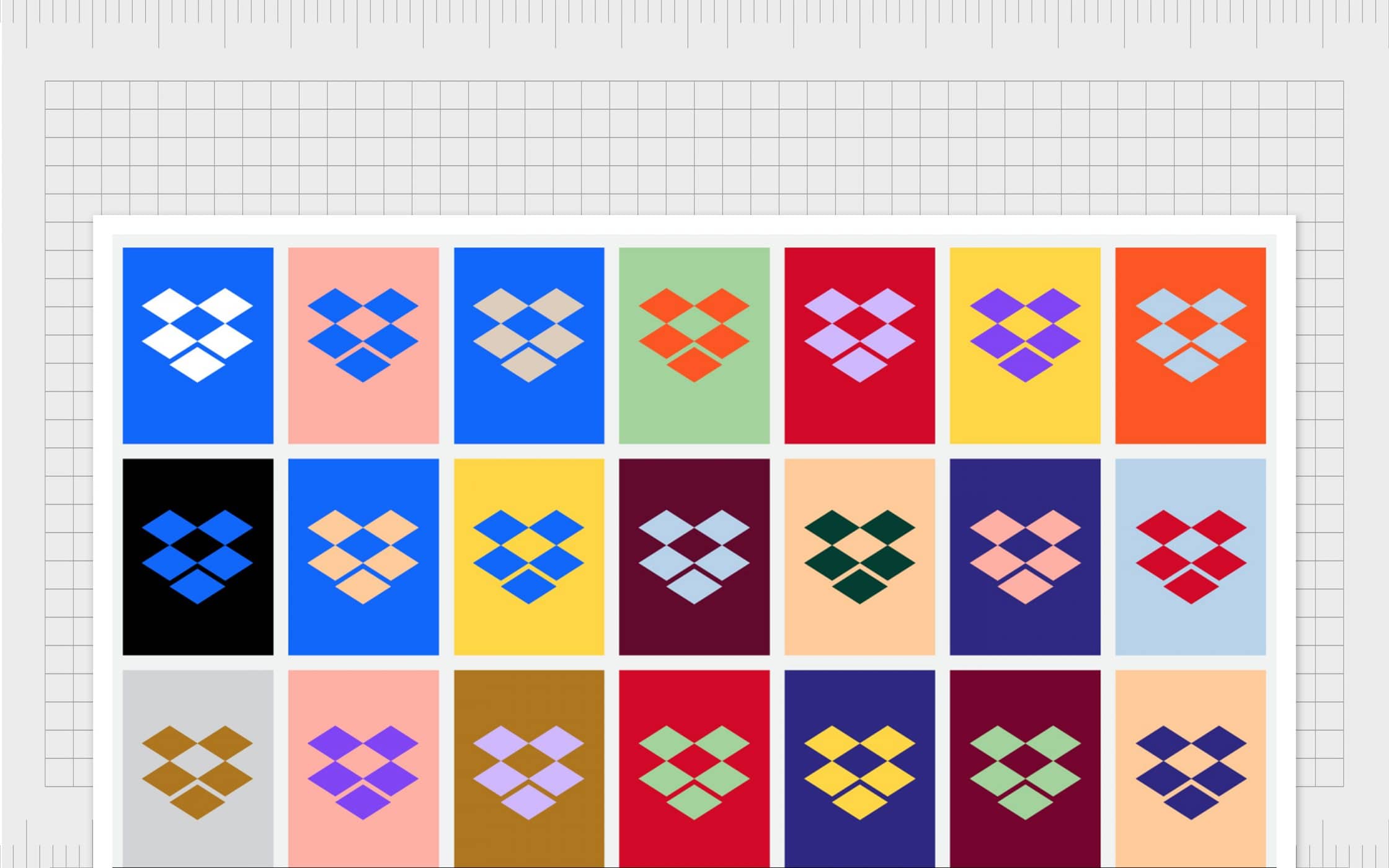
For instance, the new Dropbox logo uses a fresh and modern piece of imagery, combined with a range of bold and bright colours to cull from, to ensure that customers tin can create their ain experience of the brand. This highlights the nature of the company, which claims to offering storage that'due south bespoke to whatsoever business or individual.
3. Brand distillation
Lately, it seems that modern graphic blueprint is on a path towards trends that are simpler, nonetheless more immersive at the same fourth dimension. The history of graphic design has evolved to a point where experts take recognised the importance of client experience, and what that means to visual content.
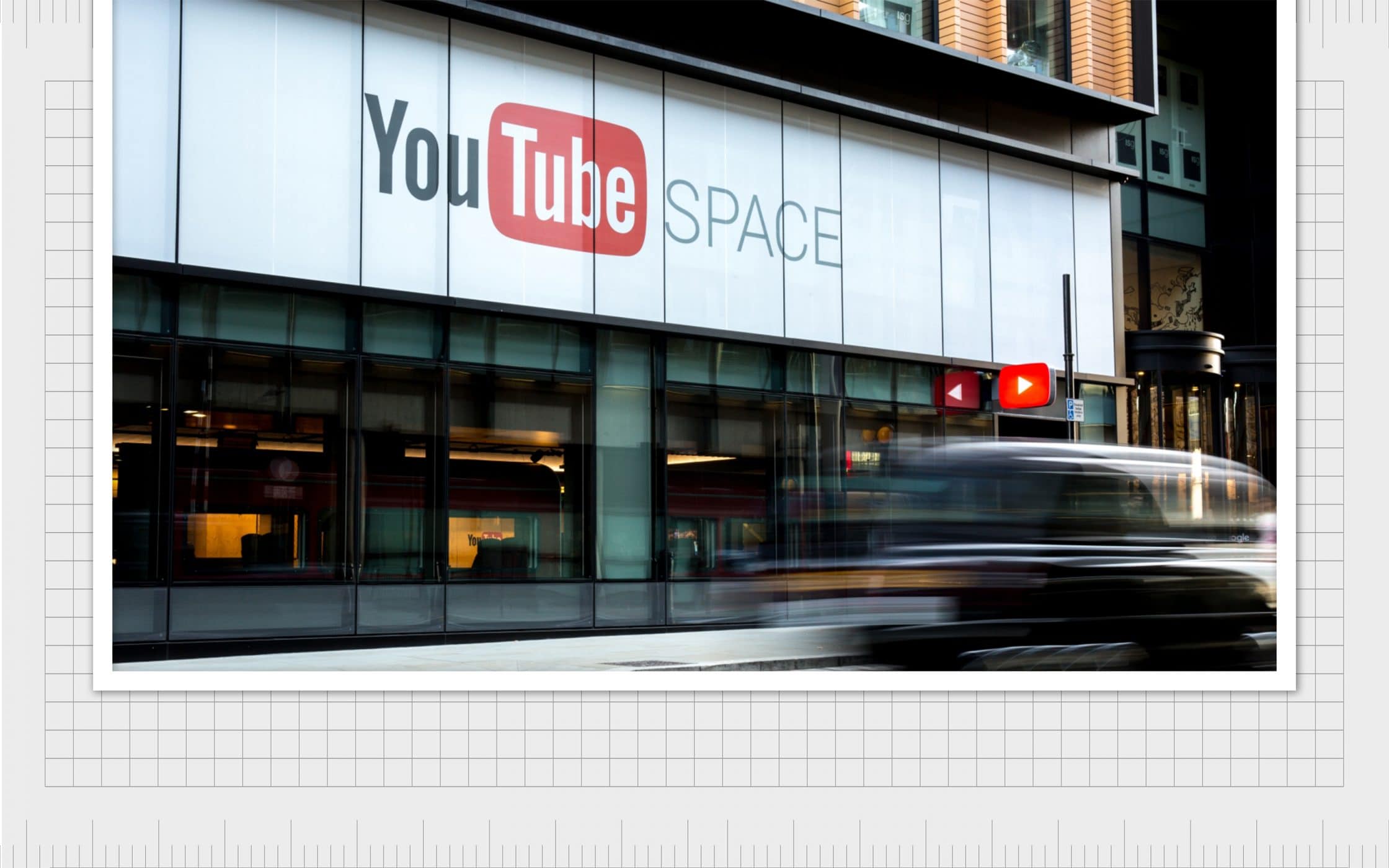
Function has overridden superfluous design details today, and brands are striving to reduce their cadre avails, while simultaneously packing more meaning into every element. For case, YouTube has dropped the name about entirely from their brand portfolio, reducing everything to ane simple, effective image. Graphic pattern doesn't have to be complicated anymore. It but needs to hateful something and make an impact.
Looking at tomorrow: From modernist graphic blueprint to futuristic
The more we explore the history of graphic design, the more it showcases itself equally a mirror to the broader changes the world has experienced throughout the world. When the world needed beauty, nosotros had Art Nouveau, and now that customers are on the search for simplicity, nosotros accept a brand-new version of modern graphic design.
The key to graphic design today is remembering that visuals aren't just about making a brand look attractive anymore – they're nearly contributing to the client experience. From logo design to the images you lot post on each blog, graphic design is the key to a memorable visual identity.
As nosotros move into the future, the chances are that graphic blueprint will continue to change. Though it's impossible to predict all of the changes the years ahead will bring, hither are only a few predictions to consider:
ane. A residuum between dreaming of the future, and remembering the past
One tendency we've noticed recently in the graphic design environment is that in that location's an about equal desire for designs that button the boundaries of cutting-border imagery, and concepts that hark dorsum to vintage styles. In a world that belongs to multiple generations of consumers, designers are beginning to think more advisedly about whether they desire to appeal to the futuristic generations of tomorrow or the older customers who require the innocence and simplicity of their youth.
Vintage graphic design has become a mutual component of a lot of branding elements. Hand-drawn elements, simple lines, and unique typography can all be a great way to tap into the nostalgia backside a certain brand or give more heritage to a new company.
2. Data volition change the game
As mentioned above, the digital revolution has inverse the mode that graphic designers approach the manufacture. We're no longer making assumptions nigh clients but responding to specific needs based on the understandings gleaned through studies, surveys, and online metrics. For instance, as businesses began to find that more people were browsing websites from their phone, they learned that graphic design for their websites had to be more responsive, and prepare to work with any device.
As bogus intelligence and machine learning enters the design space, it may fifty-fifty be possible to determine how people feel about a brand without asking them. Things like sentiment analysis could lead to more intuitive design practices.
three. Individuality will go more of import
Of course, while the digital earth has a lot of benefits to offering modernistic designers, it likewise comes with its own share of unique challenges also. Today's customers know that graphics experts have endless resources at their fingertips that they can use to understand their needs. With that in heed, they look brands to create more than personalised experiences in everything they practice – from logo pattern to content creation.
Whether companies are investing in B2C marketing or their B2B marketing strategy, they'll need to use modernistic graphic design to testify their customers that they empathize them if they desire to establish loyalty. Something as simple equally using hand-drawn images for your audience instead of stock photos, or animations instead of static pictures could be the fundamental to turning prospects into brand advocates.
4. Responsive design may become more responsive
Y'all might have already heard of a concept known as "dynamic" advertising. This is when the ads a business organization shares with a client changes naturally according to that consumer's buying behaviour. This is a cracking example of how nosotros're using data to personalise the customer journey. Today'southward graphic design artists are already creating unique imagery for different electronic mail segments or banner ads. Withal, tomorrow, this responsive marketing could move to the adjacent level.
Equally we learn more than nigh human behaviour, graphic designers might be able to utilize different colours and images based on what they know the customer needs during a specific stage of the buying cycle. For instance, if a prospect feels nervous about buying from an organisation, a graphic designer could create an infographic in soft blue shades to put their mind at ease.
5. Creative typography will continue to rule
Finally, now that type-setting software is less expensive and easier to use than ever, the rate of new fonts being produced each twelvemonth has reached an astronomical level. While nosotros might not know the exact numbers, it's condom to say that information technology's getting harder to create type that stands out.
In a couple of decades, graphic designers hoping to distinguish themselves through blazon are going to have a difficult time setting themselves apart from the crowd. Nonetheless, equally we've seen in recent years, artistic typography is all the same one of the best ways to capture the attending of an audience. Designers who can find a way to overcome common fonts and connect with new customers on the behalf of their clients are sure to pb the way.
Constant development: Understanding graphic design today
Information technology's safe to say that the history of graphic design has been a long and complicated one. Graphic designers have come up a long fashion since they were scratching pictures onto cave walls. Today, we've honed the artistry of combining image and text into something that can project experiences and ideas to broad categories of people.
Graphic design is i of the most important forms of communication any concern can invest in. Information technology can be applied to something as simple as a smartphone app, or something as circuitous equally an entire brand identity. While the nature of graphic design might take changed over the years, the underlying aim remains the same. Today, just every bit they always accept, graphic designers give their clients a dissimilar mode to speak to their audience.
As the technology we have access to continues to evolve with things like virtual reality, augmented reality, and more, there's no doubt that modern graphic design will go along to change. However, in a earth that'south governed by user experience, the artists that know how to use imagery and text to convey emotion and connect with their audience should exist prepared to time-proof their techniques.
What exercise y'all think almost the evolution of graphic design? What's your favourite fashion, and where do you think we're headed? The evolution of the design world might be a circuitous thing, simply information technology'due south a journeying we love existence a function of here at Fabrik. We'd similar to hear your thoughts…
If yous enjoyed this commodity, y'all might enjoy these too:
— Getting in shape: The use of shape in logo design
— Finding your type: Font psychology in logo design
— True colours: The use of color in graphic blueprint
— Logo blueprint: A crucial chemical element in visual branding
Source: https://fabrikbrands.com/the-history-of-graphic-design/
0 Response to "Of All Arts Graphic Design Comes Closest to Meeting Us in Our Contemporary Daily Life"
Post a Comment